Cotswold Cottages: Why Britain’s Honey-Stone Country Homes Still Capture the World’s Imagination
There are few sights more romantic than a honey-coloured Cotswold cottage glowing softly in the afternoon light. With roses around the door, small-paned windows, weathered stone walls and a garden path leading towards a low timber doorway, these homes seem to belong to another age entirely.
For many countryside lovers, the Cotswold cottage is the dream: modest, beautiful, historic and deeply rooted in the English landscape. It is not simply a style of house. It is an atmosphere, one of village lanes, church bells, cottage gardens, roaring fires, flagstone floors and quiet rooms filled with books, flowers and old wood.
For readers in Britain, these cottages often evoke nostalgia for a slower rural life. For international admirers, especially those in the United States, they represent a storybook vision of England: ancient villages, golden stone, cosy pubs, market towns and homes that appear to have grown naturally from the earth around them.

So what is it about Cotswold cottages that continues to enchant people across the world?
What Is a Cotswold Cottage?

A Cotswold cottage is a traditional country home found in the Cotswolds, a beautiful region of south-central England known for its rolling hills, historic villages and distinctive golden limestone buildings.
These cottages are usually built from local Cotswold stone, which gives them their warm honey-coloured appearance. Many feature steeply pitched roofs, mullion windows, exposed beams, fireplaces, flagstone floors and cottage gardens filled with roses, lavender, hollyhocks and clipped hedges.
Although some Cotswold cottages are small and simple, others have been extended over generations into larger village homes. What they share is a sense of age, texture and place. They feel inseparable from the lanes, gardens and villages around them.
The Honey-Coloured Stone That Defines the Cotswolds

The most recognisable feature of a Cotswold cottage is its stone.
Cotswold stone is a type of limestone, often described as golden or honey-coloured. In soft sunlight, it can appear almost buttery; after rain, it takes on a deeper, more weathered tone. This natural variation gives Cotswold villages their famous warmth and harmony.
Unlike brick terraces or rendered cottages, Cotswold stone homes have a quiet permanence. Their walls are thick, textured and full of character. No two stones are exactly alike, and that irregularity is part of their charm.
This is one reason entire Cotswold villages feel so visually beautiful. The cottages, churches, manor houses, barns and garden walls often share the same local material, creating a gentle architectural rhythm. The result is not grand or showy, but deeply atmospheric.
It is the kind of beauty that rewards slow looking.
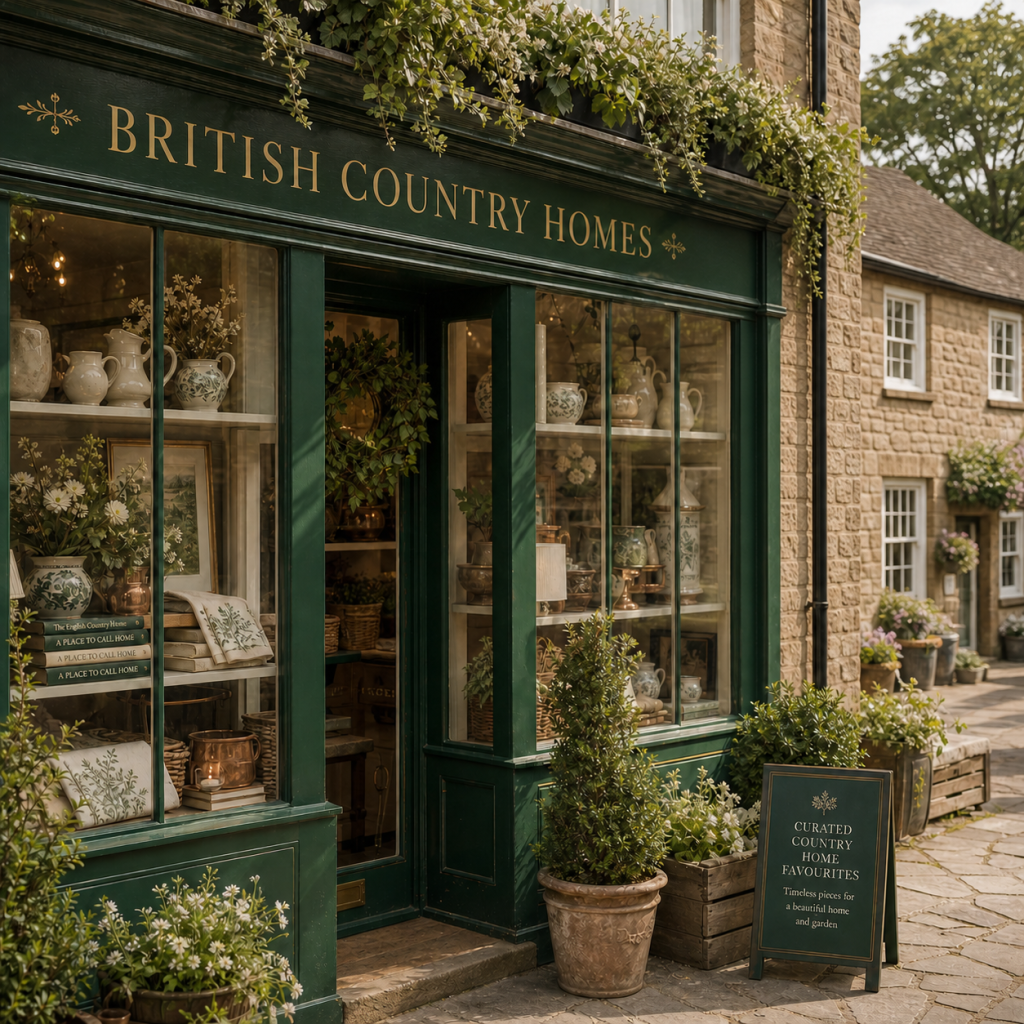
Country Style: Lounging around

Period Homes Pt 1: Medieval & Tudor
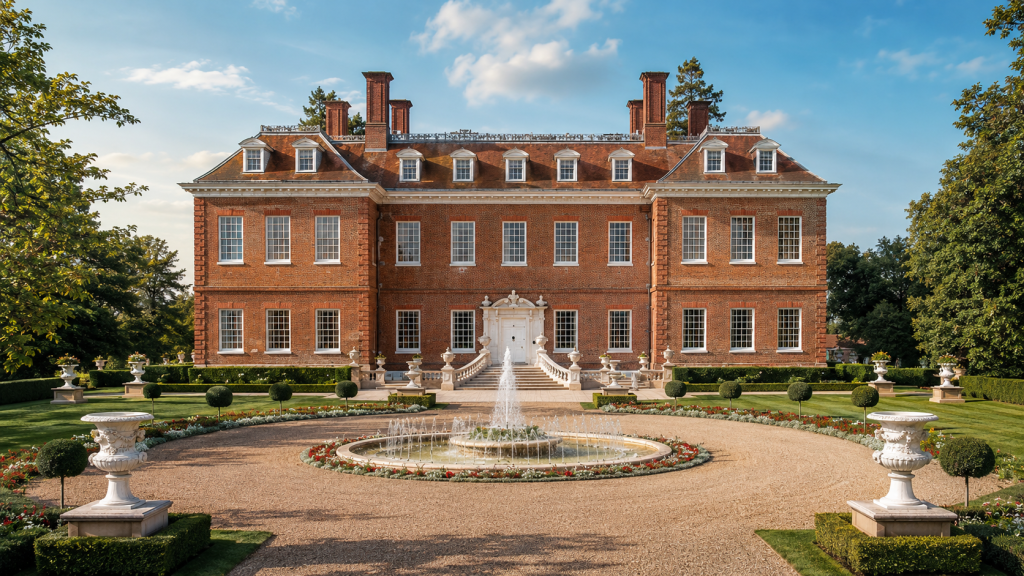
Denham Place: A Historic British Country House and Buckinghamshire Mansion

5 Timeless Interior Design Trends for British Country Homes in 2026
British country homes have always possessed a quiet…
The Details That Make Cotswold Cottages So Romantic

A Cotswold cottage is rarely defined by one feature alone. Its charm comes from the combination of many small details.
There may be stone mullion windows set deep into thick walls. There may be a low doorway framed by climbing roses. Inside, you might find exposed beams, a large fireplace, uneven floors, painted cupboards, antique furniture and windowsills filled with flowers or old china.
Some cottages have inglenook fireplaces, large hearths traditionally built for cooking and warmth. Others have flagstone floors that have been worn smooth over centuries of use. Many have gardens that feel deliberately informal: paths edged with lavender, roses tumbling over walls, foxgloves leaning towards the light and herbs growing close to the kitchen door.
These features create the feeling so many readers love: a home that is beautiful, but not polished to perfection. A Cotswold cottage should feel lived in, layered and gently timeworn.
That is what separates true country-house charm from a decorative imitation.


Where to Find the Prettiest Cotswold Cottages

The Cotswolds is filled with villages and market towns where traditional cottages can still be admired. Some are famous, others remain quieter and more tucked away.
For our blog about everything Cotswolds, you can CLICK HERE
Bibury is often celebrated for its picturesque stone cottages and riverside setting. Castle Combe is beloved for its almost cinematic village beauty, with cottages lining the sloping street. Chipping Campden is known for its elegant High Street and historic wool-town architecture. Broadway, Burford, Stow-on-the-Wold and Painswick also offer many of the golden-stone scenes people associate with the region.

For cottage lovers, the pleasure is not only in the individual houses, but in the wider setting. A Cotswold cottage is at its most magical when seen beside a churchyard, down a narrow lane, behind a low stone wall or at the edge of a village green.
It is the relationship between house and landscape that makes these homes feel so timeless.
Period Homes Pt 1: Medieval & Tudor
Why Cotswold Cottages Appeal to International Readers

For readers outside Britain, Cotswold cottages often represent a very particular dream of English country life.
They are intimate rather than imposing. They sit in villages where footpaths, pubs, churches and gardens are part of daily life. Their architecture feels old, human-scaled and full of history. To someone used to newer homes or larger suburban layouts, a Cotswold cottage can feel almost impossibly romantic.
There is also a sense of continuity. These are homes that have weathered generations. They may have once housed farmers, craftspeople, estate workers, merchants or families connected to the surrounding land. Even when carefully restored, they carry traces of the past.
For many admirers, the appeal is not only architectural. It is emotional. A Cotswold cottage suggests warmth, retreat and belonging. It offers the fantasy of a slower morning: tea by the window, a fire in the grate, a garden full of birdsong and a village lane just beyond the gate.
This is why images of English cottages perform so strongly on social media and Pinterest. They are not simply houses. They are invitations to imagine another way of living.
Cotswold Cottage Interiors: The Look Readers Love

Inside, the most beautiful Cotswold cottages tend to balance comfort with heritage.
The look is rarely sleek or overly designed. Instead, it is layered and collected over time. Think old wooden tables, linen curtains, botanical prints, brass lamps, framed landscapes, bookshelves, wool throws and a generous armchair beside the fire.
Colours are usually soft and natural: chalky whites, warm creams, muted greens, faded blues, earthy browns and gentle pinks. These tones sit beautifully against stone walls, oak beams and flagstone floors.
Pattern has a place too. Florals, checks, stripes and faded prints all work well in a traditional English cottage interior. The secret is restraint. A room should feel charming rather than cluttered, comfortable rather than staged.
The best cottage interiors also make room for imperfection. Slightly uneven plaster, a scuffed table, an old rug or a painted dresser with worn edges can add more character than anything brand new.

For British Country Homes readers, this is a wonderful area for further inspiration: how to bring a little Cotswold cottage atmosphere into your own home, whether you live in a country cottage, a townhouse or a modern apartment.
How to Bring the Cotswold Cottage Look Home

You do not need to own a Cotswold cottage to borrow from its timeless style.
Start with natural materials. Wood, wool, linen, stone, ceramic and aged metal all help create a softer country feel. Add warmth through lighting: table lamps, wall lights, candles and shaded lamps are often more flattering than harsh overhead light.

Choose useful, beautiful pieces rather than obvious decoration. A stoneware jug filled with garden flowers, a wool blanket folded over a chair, a brass candlestick on a mantelpiece or a stack of old books can all help create the quiet charm associated with cottage interiors.
For a softer English country look, consider botanical cushions, checked throws, vintage-style lampshades, framed countryside prints, woven baskets, enamelware, traditional garden tools and simple linen tableware.
The aim is not to copy a cottage exactly. It is to create a mood: warm, layered, natural and gently nostalgic.
Editor’s note: This is also where we have carefully chosen affiliate recommendations can feel natural — a quiet shopping edit of country-home details, rather than a hard sales feature.
Dreaming of Buying a Cotswold Cottage?
For many people, browsing Cotswold cottages is a pleasure in itself. Even those not actively moving enjoy looking at village homes, stone farmhouses, converted barns and period cottages tucked away in beautiful countryside.
The Cotswolds has long been one of Britain’s most desirable rural regions, so cottages here often attract strong interest. Buyers are drawn not only by the houses themselves, but by the lifestyle: pretty villages, market towns, countryside walks, traditional pubs, gardens, schools, history and easy access to larger cities.
But buying a period cottage is not only about romance. Older homes can require careful maintenance, sensitive restoration and an understanding of listed building rules where applicable. Thick stone walls, old roofs, uneven floors and historic details are all part of the charm, but they also deserve respect.
That is why British Country Homes approaches these properties as more than listings. We look at the architecture, the setting, the story, the interiors and the emotional pull of the countryside dream.
Because sometimes the joy is not only in buying the house.
Sometimes it is in imagining the life.
Why Cotswold Cottages Remain Britain’s Ultimate Country Dream
Trends in interiors and property come and go, but the appeal of the Cotswold cottage endures.
Perhaps it is because these homes offer something many people quietly long for: beauty without excess, history without formality and comfort without pretence. They are picturesque, yes, but their charm runs deeper than appearance.
A Cotswold cottage is rooted in place. It belongs to the village, the landscape, the stone beneath it and the people who have passed through its rooms over time. It feels both humble and precious.
In a fast-moving world, that sense of permanence is powerful.
To stand before a honey-stone cottage with roses at the door is to feel, even briefly, that life might be quieter, slower and more beautiful. That is the enduring magic of the Cotswolds — and the reason these cottages continue to capture hearts around the world.

Final Thought
Whether you dream of buying one, visiting one or simply bringing a touch of English cottage charm into your own home, the Cotswold cottage remains one of Britain’s most beloved country-house ideals.
It is a symbol of rural beauty, craftsmanship, history and comfort. More than that, it is a reminder that a home does not need to be grand to be unforgettable.
Sometimes, the most enchanting houses are the ones with low doorways, old beams, climbing roses and golden stone glowing in the evening light.
Love beautiful British country homes?
Join the British Country Homes newsletter for weekly countryside inspiration, dream properties, cottage interiors, village escapes and carefully chosen country-living finds delivered to your inbox.
Subscribe today and discover the most beautiful homes, villages and interiors from across the British countryside.
FAQ Section
What is a Cotswold cottage?
A Cotswold cottage is a traditional country home found in the Cotswolds, a region of England known for honey-coloured limestone buildings, historic villages, cottage gardens and beautiful rural scenery.
What are Cotswold cottages made from?
Traditional Cotswold cottages are usually built from local limestone, often called Cotswold stone. This gives the cottages their distinctive golden or honey-coloured appearance.
Where are the prettiest Cotswold cottages?
Some of the prettiest Cotswold cottages can be found in villages and towns such as Bibury, Castle Combe, Broadway, Chipping Campden, Burford, Painswick and Stow-on-the-Wold.
Why are Cotswold cottages so popular?
Cotswold cottages are popular because they combine historic architecture, beautiful natural materials, village settings, cottage gardens and a romantic vision of English countryside living.
What is Cotswold cottage interior style?
Cotswold cottage interiors often feature exposed beams, stone floors, fireplaces, antique furniture, soft colours, floral fabrics, wool throws, brass lighting and a layered English country look.
Can I create a Cotswold cottage look in a modern home?
Yes. Use natural materials, warm lighting, soft heritage colours, botanical prints, vintage-style furniture, wool throws, ceramics, books, flowers and classic country accessories to create a similar mood.

Cotswold Cottages: Britain’s Dream Country Homes
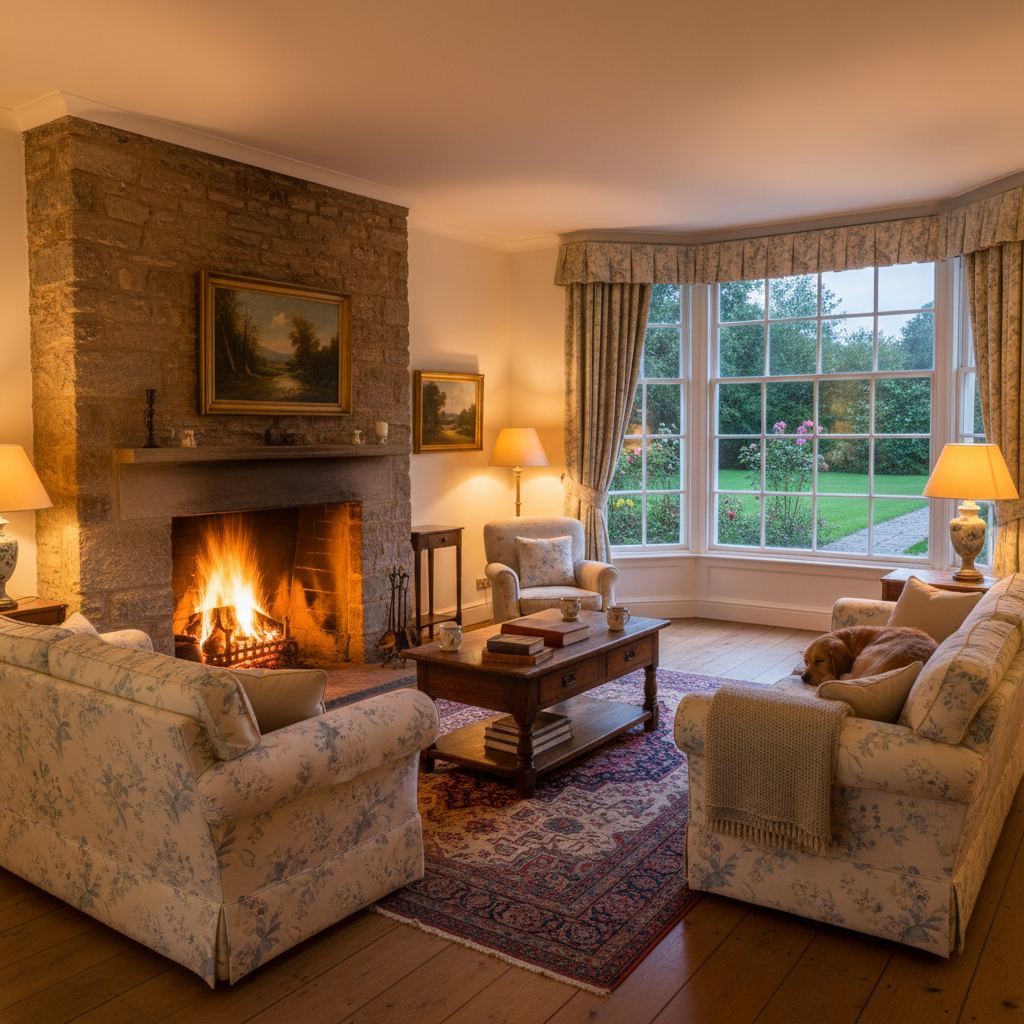
Essential Tips for Designing a Classic British Country Home Interior
Creating a classic British country home interior is about more than just decoration; it’s about…
5 Timeless Interior Design Trends for British Country Homes in 2026
British country homes have always possessed a quiet confidence. Whether it is a honey-coloured Cotswold…

Georgian Country Homes
Denham Place: A Historic British Country House and Buckinghamshire Mansion
